


:quality(80)/p7i.vogel.de/wcms/ac/4c/ac4c91e3f302ceb89613ed910c2b0929/adobestock-292127146-4053x2283v1.jpeg "(Bild: © myboys.me - stock.adobe.com)")
:quality(80)/p7i.vogel.de/wcms/58/39/5839e44836a58e3cf7d352d3210dc7d8/wdk-pressefoto-20michael-20klein-1920x1080v1.jpeg "Michael Klein, Präsident des wdk (Bild: wdk)")
:quality(80)/p7i.vogel.de/wcms/6e/47/6e473ad518365a09db0d389387c5b82a/csm-banner-005-problemloesungen-01-2a8d75b173-1068x600v1.jpeg "Produktion bei Kautschuk-Compounder Rado (Bild: Rado)")
:quality(80)/p7i.vogel.de/wcms/3b/85/3b853d5a7c8fa5640146edb920e59526/pxl-20250616-161225541-mp-4032x2266v1.jpeg "Der BIOPOLYMER Kongress 2026 findet am 15. & 16. Juni in Halle (Saale) statt. Fachvorträge, Networking und der BIOPOLYMER Innovation Award für nachhaltige Kunststofflösungen. (Bild: PlastXnow)")
:quality(80)/p7i.vogel.de/wcms/1e/04/1e04e410d83b193519e83cbc2a7566ff/silpuran-medical-adhesives-2303x1295v1.jpeg "Wacker stellte kürzlich ein auf Biomethanol basierendes Silikonadhäsiv vor, das besonders ressourcen- und klimaschonend produziert wird. Silpuran Eco 2114 erreicht eine hohe Haftkraft und eignet sich vor allem als Klebstoff für Wundauflagen und Fixierhilfen. (Bild: Wacker)")
:quality(80)/p7i.vogel.de/wcms/42/0b/420bf691d7454a85327a80ad53c45b94/thumbnail-rado-online-strainer-1772x996v1.jpeg "Die Elastomermischungen werden auch feingestrainert. (Bild: Rado Gummi)")
:quality(80)/p7i.vogel.de/wcms/b9/cd/b9cd9b5b904a2b3df8c5aaa7b98edc2c/kraiburg-20gummiwerk-20vmq-5712x3210v1.jpeg "Die Silikon-Compound-Serie wurde für anspruchsvolle Anwendungen entwickelt. (Bild: Gummiwerk Kraiburg)")
:quality(80)/p7i.vogel.de/wcms/80/bc/80bcfb071d0b136eeb3e00a006832fbb/2026--2002--2013--20fraunhofer-20imws-20aufmacher-3024x1701v1.jpeg "Der Inline-Reifenabnutzungssensor nach dem Einbau in einen Lkw-Reifen. (Bild: Rösler)")
:quality(80)/p7i.vogel.de/wcms/85/59/855967f12a6f8ff1ed20371651cb1796/screenshot-202025-12-08-20130418-690x388v1.png "Static Coefficient of Friction (SCOF) Values under Various Conditions (Bild: )")
:quality(80)/p7i.vogel.de/wcms/ba/da/bada2c6c71c5232551c26cb5c7cc62e1/screenshot-202025-12-08-20131102-710x399v1.png "(Bild: )")
:quality(80)/p7i.vogel.de/wcms/32/08/3208424a642b590ef57370b2ebb4e665/screenshot-202025-12-08-20123833-946x532v1.png "Übersicht über gängige Elastomere (Bild: )")
:quality(80)/p7i.vogel.de/wcms/13/4c/134c673ee6edc454febfc844a7ede791/bildunterschrift-201-uth-trp-blending-3024x1702v1.jpeg "Farbtest für gleichmäßiges, materialschonendes Blending zweier Reifen-Compounds im TRP-Prozess. (Bild: Uth)")
:quality(80)/p7i.vogel.de/wcms/07/56/075632bff9a9d7c9b5a44c50775c7d8b/aufmacher-g-c3-b6tz-scheibe-6000x3373v1.jpeg "Götz Scheibe von ACH Solution präsentiert am Engel-Stand auf der K 2025 eine GDL-Membrane für die Mobilität der Zukunft. (Bild: Engel Austria)")
:quality(80)/p7i.vogel.de/wcms/60/09/60095a181e6b56953727a6b89c362055/extruder-5472x3076v1.jpeg "Zwei unterschiedliche Extruder können an die mit Salzschmelze vulkanisierende Anlage angeflanscht werden. (Bild: Freudenberg Sealing Technologies)")
:quality(80)/p7i.vogel.de/wcms/58/d8/58d87b00fb0bcda2cc265da60eab6270/4-zentr--l-c3-bcftg-ger-c3-a4t-mit-w-c3-a4rmer-c3-bcck-und-kws-3507x1973v1.jpeg "Zentrales Lüftungsgerät mit Wärmerückgewinnung und Kaltwasserspeicher für die Hallenbelüftung. (Bild: Oni)")
:quality(80)/p7i.vogel.de/wcms/02/30/02306299c3bdf32e7b856bc4e0d205bf/tempro-20basic-20120-6635x3732v1.jpeg "Mit dem 3,5\"-TFT-LCD-Farbdisplay ist das Bedienen der Tempro basic Temperiergeräte noch einfacher. (Bild: Wittmann Gruppe)")
:quality(80)/p7i.vogel.de/wcms/4b/5b/4b5bc2686b3643dd079a03b312ee0608/reifen-labor-abrieb-1536x864v1.jpeg "Entwickelt wird im Zuge des Projekts „Teris“ eine Technologieplattform zur Erzeugung realitätsnahen
Gummiabriebs, dessen Analyse für Material- und Reifenentwicklungen und die Prognose für die digitalisierte Fahranalyse genutzt werden. (Bild: GPT Image Editor)")
:quality(80)/p7i.vogel.de/wcms/3b/9d/3b9d2095a8ebe7a56d7af8b1bc838d65/vdwf-azubi-up-01-5a70602339-1200x675v1.jpeg "Ziel der neuen online-Reihe des VDWF ist es, junge Talente frühzeitig abzuholen und sie mit Wissen für die Praxis zu stärken. (Bild: VDWF)")
:quality(80)/p7i.vogel.de/wcms/60/9d/609d1bf747c52a8a56a2f6ddf2144b43/deguma-walzwerk-aufmacher-367x206v1.jpeg "Ein Walzwerk nach der Überholung (Bild: Deguma)")
:quality(80)/p7i.vogel.de/wcms/23/34/23343ab8023801ac334b2f06fdeae24f/remberg-visual-copryright-remberg-5304x2983v1.png "Damit Künstliche Intelligenz echten Mehrwert schaffen kann, braucht sie eine saubere, vollständige und zugängliche Datenbasis. (Bild: Remberg)")
 RAW MATERIALS AND APPLICATIONS
Reduction of Triboelectrification of Polymeric Textiles
RAW MATERIALS AND APPLICATIONS
Reduction of Triboelectrification of Polymeric Textiles
The present work investigates the effect of blending polyester (PET) and polyamide (PA) by carbon fibers (CF) in the form of simple weaves and sliding on cotton textile. It was revealed that electrostatic charge (ESC) decreased with increasing CF content. besides, after sliding ESC displayed higher values than that observed after contact-separation.
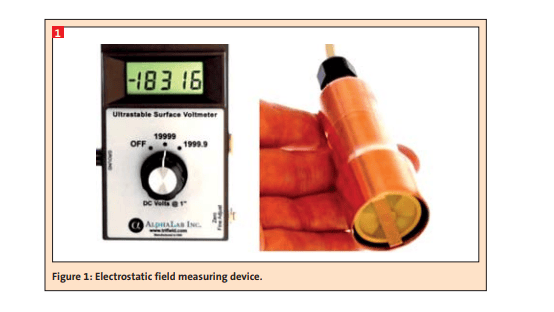
Comfort of textiles is the major factor in their evaluation as clothes. The measure of the comfort depends on the intensity of electrostatic charge (ESC) generated on the contact surfaces. Polymeric textiles are exposed to the ESC generated from the contact with other surfaces. Several attempts were carried out to reduce ESC by blending polyester (PET) and polyamide (PA) textile fibers and tested by contact and separation as well as sliding under different loads against cotton textiles. [1] It was found that ESC showed the highest negative values at 100 % PET, then decreased with increasing PA content. The positive ESC generated on the surface of the cotton displayed zero value at 80 % PA, then decreased to record negative values. The zero values of ESC were observed at 93 % PA.
Sie haben bereits ein Konto? Hier einloggen