


:quality(80)/p7i.vogel.de/wcms/13/78/13788e8080c75fc664e9d401ecff5815/dkg-100-jahre-er-ffnung-klein-1557x875v1.png "DKG-Geschäftsführer Prof. Herbert Baaser bei seiner Eröffnungsrede auf der diesjährigen Jahrestagung der DKG zum 100jährigen Jubiläum. (Bild: DKG / Stefan Wüsten)")
:quality(80)/p7i.vogel.de/wcms/f1/6e/f16efd9659e524dea8b996cd98da639e/ceo-wolfgang-meyer-maplan-1920x1079v1.png "Wolfgang Meyer ist Chief Executive Officer (CEO) der Maplan GmbH in Kottingbrunn (Österreich). Der Maschinenbau-Ingenieur zeichnet für die Transformation des Unternehmens vom Pressemaschinenbauer zum weltweiten Systemanbieter für Elastomer-Spritzgießlösungen verantwortlich. (Bild: Maplan)")
:quality(80)/p7i.vogel.de/wcms/c8/da/c8dabdd985f25f9449b453789b9c568c/aufmacher-1799x1012v1.jpeg "Von links nach rechts: Dr. Lennart Sandbrink, Projektleiter Elastomer-Recycling; Dr. Bastian Mahr, Engineering Lead Pilot Plant; Monique Buch, Chief Commercial Officer; Dr. Michael Traving, Plant Manager Piloting; Dr. Markus Dugal, Head of Process Technology; und Dr. Thomas Braig, Leiter der Geschäftseinheit Elastomers. (Bild: Covestro)")
:quality(80)/p7i.vogel.de/wcms/bd/58/bd581e3ef946e8834086ce4b545f233b/edited-photo-5-1782x1003v1.png "Vertreter von Assogomma, Consorcio und Elanova zusammen mit dem Präsidenten von Tyres Europe, Livio Magni (4.v.l.), und dem Generalsekretär Adam McCarthy (r.) bei der Unterzeichnung am 2. September 2026 in Brüssel. (Bild: Tyres Europe)")
:quality(80)/p7i.vogel.de/wcms/1e/04/1e04e410d83b193519e83cbc2a7566ff/silpuran-medical-adhesives-2303x1295v1.jpeg "Wacker stellte kürzlich ein auf Biomethanol basierendes Silikonadhäsiv vor, das besonders ressourcen- und klimaschonend produziert wird. Silpuran Eco 2114 erreicht eine hohe Haftkraft und eignet sich vor allem als Klebstoff für Wundauflagen und Fixierhilfen. (Bild: Wacker)")
:quality(80)/p7i.vogel.de/wcms/42/0b/420bf691d7454a85327a80ad53c45b94/thumbnail-rado-online-strainer-1772x996v1.jpeg "Die Elastomermischungen werden auch feingestrainert. (Bild: Rado Gummi)")
:quality(80)/p7i.vogel.de/wcms/b9/cd/b9cd9b5b904a2b3df8c5aaa7b98edc2c/kraiburg-20gummiwerk-20vmq-5712x3210v1.jpeg "Die Silikon-Compound-Serie wurde für anspruchsvolle Anwendungen entwickelt. (Bild: Gummiwerk Kraiburg)")
:quality(80)/p7i.vogel.de/wcms/28/bc/28bc53fd9ce0bdf78ebd71260ac5514d/orion-1-1920x1080v1.jpeg "Praxisnahe Einblicke: Der WBS-Jahrgang informiert sich im Rahmen der „Westtour“ über die Herstellung von Industrierußen sowie die dazugehörige Anlagen- und Verfahrenstechnik. (Bild: Deutsches Institut für Kautschuktechnologie e. V. (DIK))")
:quality(80)/p7i.vogel.de/wcms/b1/fc/b1fc64dd9e8ac91d472add6b87c25ce2/img-0542-3946x2218v1.png "Die Organisatoren der Tagung: Josef Ludwig, Ulrike Weber und Dr. Jens Meier (v.l.). Dr. Meier führte als Gastgeber vom DIK und Leiter der DKG-Regionalgruppe Nord durch das Programm. Er wurde dabei von Ludwig (Firma LNP) unterstützt. Weber von der Frankfurter DKG-Geschäftsstelle informierte über aktuelle bundesweite Projekte und Aktivitäten der DKG. (Bild: KGK/Gutbrod)")
:quality(80)/p7i.vogel.de/wcms/e9/cd/e9cd336e5a7a32bc3be55f8364b4ef8a/00292202-1516x853v1.png "Ein wesentlicher Hebel für die Kreislaufwirtschaft ist die Integration von Design for Recycling bereits in der Phase der Polymerformulierung. (Bild: Michelin)")
:quality(80)/p7i.vogel.de/wcms/80/bc/80bcfb071d0b136eeb3e00a006832fbb/2026--2002--2013--20fraunhofer-20imws-20aufmacher-3024x1701v1.jpeg "Der Inline-Reifenabnutzungssensor nach dem Einbau in einen Lkw-Reifen. (Bild: Rösler)")
:quality(80)/p7i.vogel.de/wcms/28/a5/28a50fa89c242d17f2c41c6aab384316/deguma-laborwalzwerk-1920x1081v1.png "Das kompakte Laborwalzwerk Deguma neo arbeitet mit einer vollelektrischen, servogesteuerten Spaltverstellung. Über ein integriertes Bedienpanel und separat angetriebene Walzen lassen sich Walzenspalt, Drehzahl und Friktion exakt einstellen. (Deguma)")
:quality(80)/p7i.vogel.de/wcms/5a/5a/5a5ad5b631921bc3672cd977bf401279/clemens-behmenburg-sehr-klein-1865x1049v1.png "Clemens Behmenburg, Executive Vice President Systems & Solutions, Shibaura Machine LWB. (Bild: Shibaura Machine LWB)")
:quality(80)/p7i.vogel.de/wcms/3e/37/3e3789915ffc5cef824424b5f893a3f5/maplan-besucher-2-1920x1079v1.png "216 Branchenexperten aus 23 Ländern folgten der Einladung zum Day of Technology bei Maplan. Sie konnten insgesamt 31 Maplan-Maschinen begutachten, die unter realen Bedingungen Gummi verarbeiteten. (Bild: Maplan)")
:quality(80)/p7i.vogel.de/wcms/a2/71/a2717a2e2f0085f7a3752e608110dfca/02-pm-imm-md-1920x1080v1.jpeg "Die gemeinsam entwickelte PXL 201-100/55 Silco-Set ermöglicht die flexible Verarbeitung von Thermoplasten und Flüssigsilikon (LSR) auf einer Plattform. Vertreter von MD Elektronik und Krauss Maffei vor der PXL-Technikumslösung (v. l. n. r. Florian Pell, Christian Heilmann, Peter Krause, Christian Rössler). (Bild: Krauss Maffei)")
:quality(80)/p7i.vogel.de/wcms/8c/b5/8cb54ca58b25c03b976310bc0e8f5856/csm-2026-0066-elmet-smartshot-i-fakuma-image-a76fbd7318-732x412v1.jpeg "Smartshot i ist intelligente Kaltkanaltechnik für den LSR-Spritzguss. (Bild: Elmet)")
:quality(80)/p7i.vogel.de/wcms/02/30/02306299c3bdf32e7b856bc4e0d205bf/tempro-20basic-20120-6635x3732v1.jpeg "Mit dem 3,5\"-TFT-LCD-Farbdisplay ist das Bedienen der Tempro basic Temperiergeräte noch einfacher. (Bild: Wittmann Gruppe)")
:quality(80)/p7i.vogel.de/wcms/4b/5b/4b5bc2686b3643dd079a03b312ee0608/reifen-labor-abrieb-1536x864v1.jpeg "Entwickelt wird im Zuge des Projekts „Teris“ eine Technologieplattform zur Erzeugung realitätsnahen
Gummiabriebs, dessen Analyse für Material- und Reifenentwicklungen und die Prognose für die digitalisierte Fahranalyse genutzt werden. (Bild: GPT Image Editor)")
:quality(80)/p7i.vogel.de/wcms/3b/9d/3b9d2095a8ebe7a56d7af8b1bc838d65/vdwf-azubi-up-01-5a70602339-1200x675v1.jpeg "Ziel der neuen online-Reihe des VDWF ist es, junge Talente frühzeitig abzuholen und sie mit Wissen für die Praxis zu stärken. (Bild: VDWF)")
:quality(80)/p7i.vogel.de/wcms/63/5b/635b44caeca087959e3360e54e785bf9/bild1-bareiss-7488x4208v1.png "Unter dem Motto „The Future has a Pulse“ präsentiert Bareiss seinen neuen Pulsed Mechanical Analyzer (PMA) erstmals der Öffentlichkeit. (Bild: Bareiss)")
:quality(80)/p7i.vogel.de/wcms/43/4e/434e4c7968383b54a583cd5f88bf1c7a/maddox-ai-bildschirmmockup-wire-quality-300dpi-2480x1395v1.jpeg "Bereits kleinste Änderungen im Prozess können sichtbare Veränderungen auf der Produktoberfläche erzeugen. Diese Effekte sind technisch meist unkritisch, erschweren aber die automatisierte Inspektion erheblich. (Bild: Maddox AI)")
:quality(80)/p7i.vogel.de/wcms/23/34/23343ab8023801ac334b2f06fdeae24f/remberg-visual-copryright-remberg-5304x2983v1.png "Damit Künstliche Intelligenz echten Mehrwert schaffen kann, braucht sie eine saubere, vollständige und zugängliche Datenbasis. (Bild: Remberg)")
 ELASTOMERS AND PLASTICS
Nanocomposite Innovation: Reinventing Biomedical Solutions with Bio-epoxy, Sisal Fiber, and Nano- Hydroxyapatite
ELASTOMERS AND PLASTICS
Nanocomposite Innovation: Reinventing Biomedical Solutions with Bio-epoxy, Sisal Fiber, and Nano- Hydroxyapatite
This research focuses on the mechanical and tribological parameters of the bio-epoxy composite materials. The composites consist of varying weight percentages of the bio-epoxy resin, sisal fibers, and nHA nanoparticles. The optimal formulation, with a ratio of 60/20/20 (bioepoxy/sisalfiber/nHA), gives the highest mechanical properties, and a very low values of both wear rate coefficient of friction.
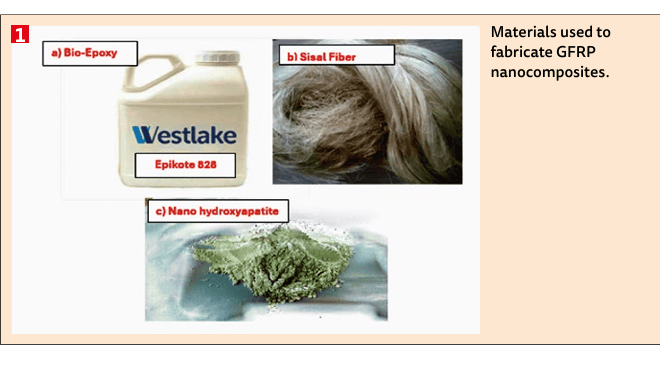
The use of composite materials has gained tremendous importance in biomedical engineering by providing personalized properties that meet the challenges posed by the development of regenerative medicine besides applications in the design and fabrication of biomedical devices. The recent effort in bio-composite fabrication has increased manifolds due to the growing concerns about non-renewable and non-biodegradable materials polluting the environment. [1-3].
Sofort weiterlesen mit
473 € / Jahr
-
Alle Inhalte lesen
-
Alle E-Paper inklusive
-
Jederzeit online kündbar
SSL-Verschlüsselung